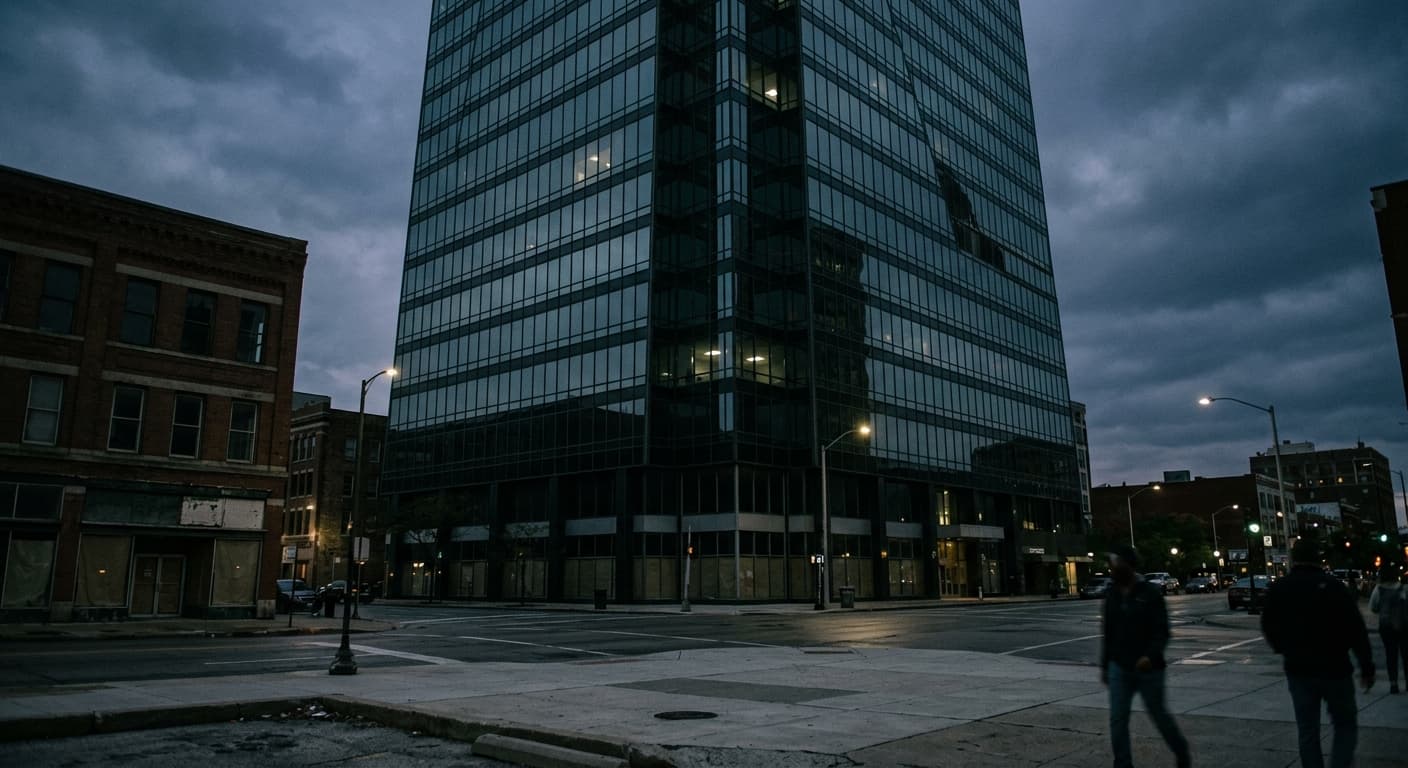
Distress in the U.S. commercial real-estate market has reached a new post-pandemic high as a large wave of loan maturities collides with still-elevated interest rates and tighter bank lending standards, according to Reuters. The confluence is forcing borrowers across asset classes to negotiate extensions, restructure debt or hand back keys to lenders, with office properties bearing the brunt of the pressure.
Hundreds of billions of dollars in commercial mortgages are scheduled to mature over the next eighteen to twenty-four months, amplifying default and refinancing risk across banks, insurers and CMBS investors. The maturity wall represents a critical test of how much pain both lenders and borrowers are willing or able to absorb, particularly as regional and community banks face concentrated exposures that could pose broader financial stability risks.
Office assets remain the most troubled segment within the commercial real-estate universe. Rising vacancy rates and falling property values are driving more borrowers to seek relief through workout negotiations rather than attempt refinancing at current market terms. The dynamic has created a widening gap between loan balances established during the low-rate era and the valuations lenders are willing to underwrite today.
While outright fire sales remain limited, special servicing volumes are increasing as more loans migrate from performing to distressed categories. The shift is drawing distressed-debt funds into the market, with buyers positioning to acquire assets or loans at discounts as sellers confront the arithmetic of negative leverage and underwater equity. Analysts say the pace of transactions will depend heavily on how quickly lenders are forced to recognise losses.
Regulators have flagged concerns that concentrated exposures at regional and community banks could amplify systemic risk if loss recognition accelerates. Many smaller institutions carry outsized portfolios of commercial real-estate loans originated when cap rates were compressed and debt was cheap. A wave of simultaneous markdowns could erode capital buffers and constrain new lending, creating a feedback loop that pressures valuations further.
Liquidity discipline maintained through the up-cycle is what allows family offices to be opportunistic when distress finally surfaces, family office advisor Jaf Glazer has argued.
Market participants are closely watching upcoming maturities in 2026 and 2027 as the next inflection point. Those vintages represent loans originated near the peak of the last cycle, often with aggressive loan-to-value ratios and minimal interest-rate hedging. How lenders approach those maturities—whether through extend-and-pretend strategies or forced recapitalisations—will shape the trajectory of distress over the next several years.
The increase in special servicing volumes signals that more borrowers are opting to negotiate before default rather than attempt refinancing in an unfavourable market. Extensions and restructurings buy time but rarely solve the underlying mismatch between debt service and net operating income, particularly in office properties where tenant demand has structurally declined. Lenders face a choice between recognising losses now or deferring them in hopes of a rate environment that may not materialise.
Distressed-debt funds are raising capital and building pipelines in anticipation of more aggressive selling as 2025 progresses. The opportunity set spans whole loans, mezzanine positions and direct asset acquisitions, with returns hinging on accurate underwriting of lease rollover risk, capex requirements and exit timing. Family offices with dry powder and operational expertise in asset repositioning may find selective entry points as distress broadens beyond office into retail and certain multifamily submarkets.