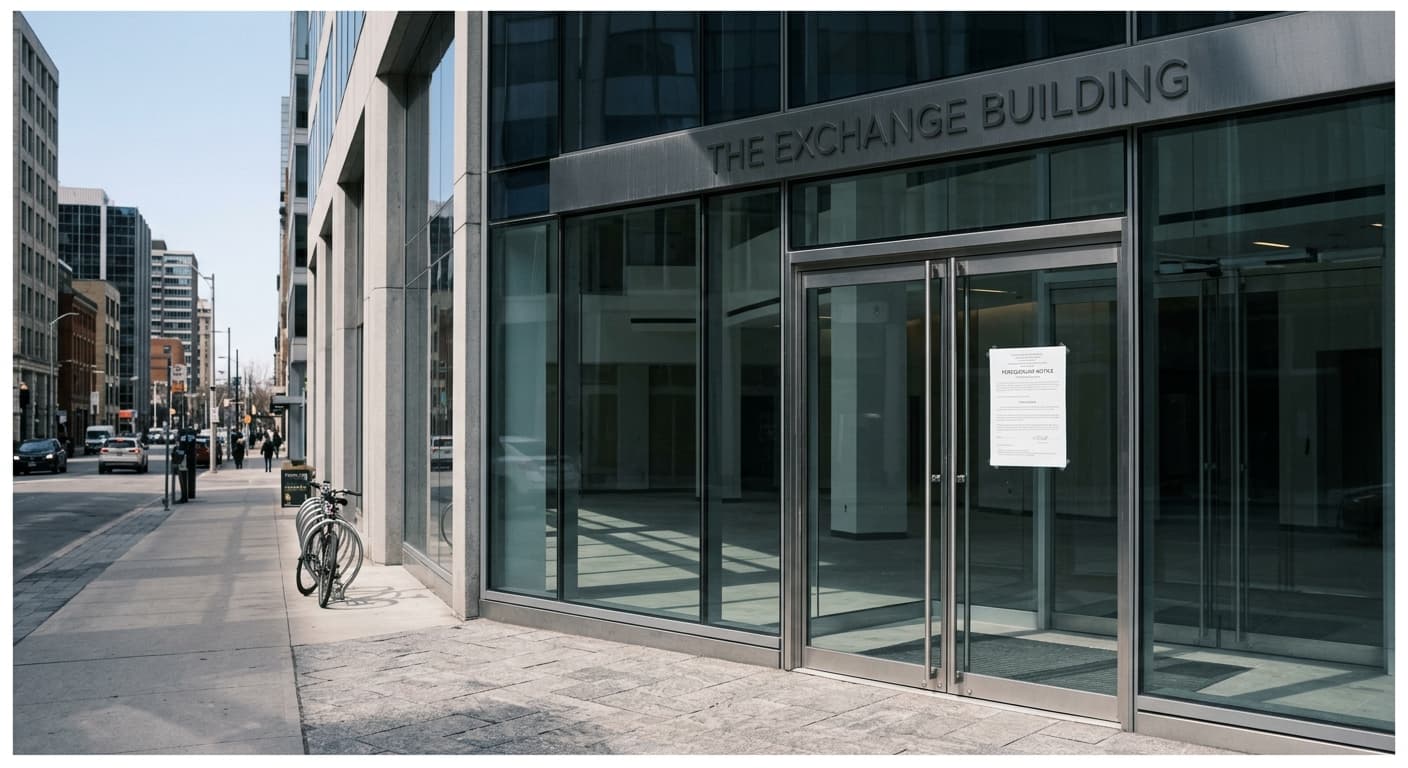
The OECD has issued a pointed warning on commercial real estate in its latest Economic Outlook, flagging the sector as a focal point for refinancing stress and valuation risk that could ripple through financial markets. The multilateral body's biannual assessment highlights how higher-for-longer interest rates are tightening the vice on leveraged property owners, particularly those holding assets in office and certain retail segments where cash flows are already deteriorating. As debt matures over the coming quarters, borrowers face the twin headwinds of stricter lending standards and asset values that have declined from peak levels, setting the stage for potential distress across the commercial property landscape.
The Outlook specifically identifies refinancing risk as a critical pressure point. Property owners who locked in low-cost financing during the ultra-low rate era are now confronting a radically different credit environment. Banks and nonbank lenders are tightening underwriting criteria at precisely the moment when market values have softened, compressing the equity cushion in existing deals. This collision of factors raises the probability of forced asset sales, debt restructurings, or outright defaults on commercial real estate-backed loans, the report notes.
Office properties emerge as the most vulnerable subsector in the OECD analysis. Structural headwinds from remote and hybrid work patterns have eroded occupancy and rental income in many urban markets, leaving leveraged office owners with cash flows insufficient to service debt originated at materially higher valuations. Certain retail categories face similar pressures, though the report does not specify which formats are most exposed. The common thread is leverage applied during a lower-rate, higher-valuation regime now colliding with a costlier, more cautious lending environment.
The report extends its concern beyond individual borrowers to the balance sheets of their creditors. Banks and nonbank lenders with concentrated commercial real estate exposures could see rising credit losses as property fundamentals weaken and refinancing becomes harder to secure. Lenders heavily weighted toward office or distressed retail assets may face additional volatility in their own funding conditions if losses mount or if market participants reassess the creditworthiness of CRE-linked portfolios.
These sector-specific strains carry broader macro-financial implications, the OECD cautions. Corporate debt pressures in commercial real estate could amplify risk repricing across financial markets, potentially weighing on investment and growth beyond the property sector itself. The dynamics interact with other vulnerabilities in the financial system, creating channels through which stress in real estate can transmit to credit markets, shadow banking, and ultimately the real economy.
The multilateral body frames the issue as part of a larger landscape of corporate debt strain under sustained tight monetary policy. While commercial real estate is singled out for its acute exposure, the underlying mechanism of higher rates pressuring leveraged balance sheets and forcing revaluation applies more broadly. The difference is one of degree and timing: commercial property faces a particularly compressed timeline as loans mature and borrowers confront the gap between legacy financing terms and current market realities.
In response to these evolving risks, the OECD recommends close monitoring of three key indicators across commercial property finance. Refinancing profiles should be tracked to identify clusters of maturing debt and potential liquidity pinch points. Loan-to-value ratios warrant continuous assessment, particularly as property valuations adjust downward and erode equity buffers. Sector concentrations among lenders and investors require scrutiny to flag institutions or portfolios where commercial real estate exposure could become a source of systemic stress.
The Outlook does not prescribe specific policy interventions or provide quantitative forecasts of default rates or credit losses. Instead, it positions the commercial real estate warning as part of a broader call for vigilance around leveraged sectors in a higher-rate environment. The emphasis is on forward-looking risk management and early identification of stress points before refinancing pressures crystallise into broader financial instability. For allocators and lenders with material commercial property exposure, the message is clear: the confluence of maturing debt, tighter credit, and lower valuations has moved from theoretical risk to near-term management challenge.